

Fire Door Repair vs Replacement: How to Make the Right Choice
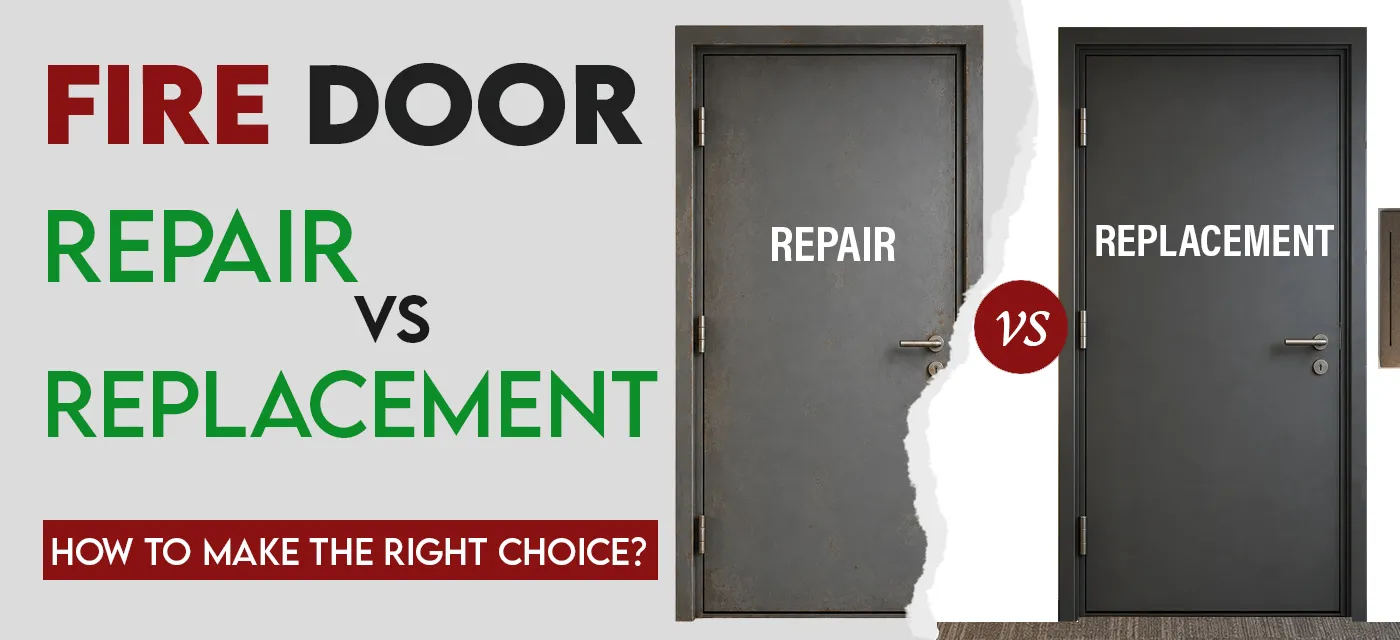
When it comes to fire safety, understanding the difference between a fire door and a fire exit is crucial. Both play important roles in safeguarding lives and minimizing damage during emergencies, but they serve distinct purposes and follow different regulations. In this article, we’ll explore the key differences, functions, and locations where each is used, along with some safety tips.
But does every damaged fire door need to be replaced? Not necessarily. In some cases, professional repair and maintenance may restore the door to proper working condition. In other cases, replacement is the safer and more appropriate option.
This guide explains the key differences between fire door repair and replacement, what to inspect, and how to decide which option is suitable.
What is a Fire Door?
A fire door is a specially designed door assembly intended to help restrict the spread of fire and smoke between designated areas of a building for a specified period.
A complete fire door assembly may include:
- Fire-rated door leaf
- Door frame
- Hinges
- Door closer
- Locks and latches
- Vision panels, where applicable
- Intumescent seals
- Smoke seals
- Fire-rated glazing
- Other compatible hardware
The performance of the assembly depends on the door, frame, hardware and installation working together correctly.
Why Is Fire Door Maintenance Important?
A fire door may look perfectly normal but still have issues that affect its performance.
Regular inspection can identify problems such as:
- Damaged door leaf
- Cracks or holes
- Loose hinges
- Damaged seals
- Faulty door closer
- Misalignment
- Damaged frame
- Door not closing completely
- Damaged or unsuitable hardware
- Gaps around the door
- Damaged fire-rated glass or vision panel
A fire door that does not close and latch properly may not provide the intended level of protection.
Fire Door Repair vs Replacement
The right solution depends on the type and severity of the damage, the condition of the complete assembly, and whether the repair can restore the required performance.
| Factor | Fire Door Repair | Fire Door Replacement |
|---|---|---|
| Minor hardware problem | ✓ Suitable | Usually not required |
| Door closer failure | ✓ Often suitable | Usually not required |
| Damaged seals | ✓ Often suitable | Usually not required |
| Minor alignment issue | ✓ Often suitable | Usually not required |
| Significant door leaf damage | May not be suitable | ✓ Recommended |
| Severe corrosion | May not be suitable | ✓ Recommended |
| Major frame damage | May not be suitable | ✓ Recommended |
| Unknown fire-rating / performance | Limited | ✓ Safer option |
| Extensive modification | Risky | ✓ Consider replacement |
When Can a Fire Door Be Repaired?
Repair may be appropriate when the underlying fire door assembly remains suitable and the defect can be corrected without compromising its fire performance.
Common repair situations include:
1. Faulty Door Closer
A door closer that is damaged, incorrectly adjusted or no longer operating correctly can prevent the door from closing properly.
Where compatible replacement hardware is available, the closer may be replaced or adjusted.
2. Damaged Intumescent or Smoke Seals
Fire doors commonly use seals around the perimeter of the door assembly.
If seals are damaged, missing or deteriorated, they may need to be replaced with compatible products appropriate for the specific fire door assembly.
3. Loose or Damaged Hinges
Loose hinges can cause the door to drop or become misaligned.
Compatible fire-rated hinges and appropriate fixings may restore correct operation.
4. Alignment Problems
A door that rubs against the frame or fails to close properly may have an alignment issue.
The cause should be identified before making adjustments. Simply modifying the door or frame without understanding the fire-door assembly can compromise its performance.
5. Hardware Problems
Locks, latches and other hardware can wear over time.
Where replacement is necessary, the replacement hardware should be suitable for the fire-rated door assembly.
When Should a Fire Door Be Replaced?
Replacement becomes more appropriate when the damage is extensive or the original fire-door assembly can no longer be reliably restored.
1. Severe Damage to the Door Leaf
Large holes, significant cracks, severe impact damage or major structural deterioration may make repair inappropriate.
2. Severe Corrosion
Steel fire doors installed in harsh environments can develop corrosion.
If corrosion has significantly weakened the door leaf, frame or structural components, replacement may be preferable to repair.
3. Damaged Frame
The frame is an important part of the fire-door assembly.
A severely damaged, distorted or improperly installed frame can prevent the door from functioning correctly and may require replacement.
4. Unauthorised Modifications
Cutting, drilling or modifying a fire door for additional hardware, cables, ventilation or other purposes can affect its tested performance.
If the assembly has been extensively modified and its original performance can no longer be established, replacement may be the better option.
5. Unknown Fire Performance
If the door's fire rating, specification or installation history cannot be established, it is important to investigate before relying on it as part of a fire-safety system.
Where compliance or performance cannot be adequately demonstrated, replacement with an appropriate certified/tested assembly may be considered.
Fire Door Repair: What Should You Avoid?
Not every repair method is suitable for a fire-rated door.
- Using ordinary non-fire-rated hardware
- Filling major damage with unsuitable materials
- Drilling unnecessary holes into the door
- Removing fire-rated seals
- Replacing components with incompatible products
- Altering the door without considering its tested configuration
- Painting over or damaging identification markings
- Installing ordinary glass in a fire-rated vision panel
- Making modifications without qualified assessment
A fire-rated door should not be treated like an ordinary interior door.
How to Decide: Repair or Replace?
A simple decision process can help determine the most appropriate solution.
Inspect the Door
Check the door leaf, frame, hinges, closer, seals, lock/latch and vision panel.
Identify the Damage
Determine whether the problem is cosmetic, hardware-related, alignment-related, seal-related, structural or fire-performance related.
Check the Door Specification
Where available, identify the fire rating, manufacturer, door type, certification/test information and hardware specification.
Assess Whether Repair Can Restore Performance
The key question is not simply "Can this door be repaired?" It is: "Can the door assembly be safely restored to its required performance?"
Choose Repair or Replacement
Minor, correctable defects may justify repair. Significant structural damage, severe corrosion, major modifications or uncertainty about performance may justify replacement.
Fire Door Repair vs Replacement Cost
Repair is often less expensive than replacing an entire door assembly, particularly when the problem is limited to hardware, seals or adjustment.
However, cost should not be the only deciding factor.
Consider:
Extent of damage
Door and frame condition
Availability of compatible components
Labour cost
Required fire performance
Building regulations and project requirements
Long-term maintenance
Safety requirements
A low-cost repair that compromises the door's fire performance can ultimately be more expensive than replacing the assembly correctly.
Fire Door Maintenance Checklist
Regular inspection can help identify problems before they become major issues.
Check whether:
- The door closes fully
- The latch engages correctly
- The door is properly aligned
- Hinges are secure
- Door closer operates correctly
- Intumescent seals are present and undamaged
- Smoke seals are in good condition where required
- Vision panels are undamaged
- Glass is appropriate for the application
- Frame is secure and undamaged
- No unauthorised modifications have been made
- There are no significant gaps or obstructions
- Hardware is operating correctly
The exact inspection requirements should follow the applicable project specifications, fire-safety requirements and relevant standards.
Conclusion
Repair is generally appropriate when the defect is limited and the original fire-door assembly can be restored without compromising its required performance.
Replacement is generally more appropriate when the door or frame has significant damage, severe corrosion, extensive unauthorised modifications, or when the required fire performance cannot be reliably established.
The most important consideration should always be fire safety and the intended performance of the complete door assembly— not simply the cost of the repair.
Need Fire Door Solutions for Your Project?
Arishtha Safety Products provides fire-rated steel door solutions for commercial, industrial, healthcare and other building applications.
Whether you are planning a new fire door installation, replacement project or maintenance assessment, choosing the right door specification and compatible components is essential for long-term performance.
Looking for fire-rated steel doors for your project? Contact Arishtha Safety Products to discuss your requirements.
Contact Arishtha